Online chess platform
Product Context
World Chess develops the official online platform where players can compete in rated games and tournaments connected to the FIDE ecosystem. To get a better sense of the product, feel free to explore the platform: worldchess.com

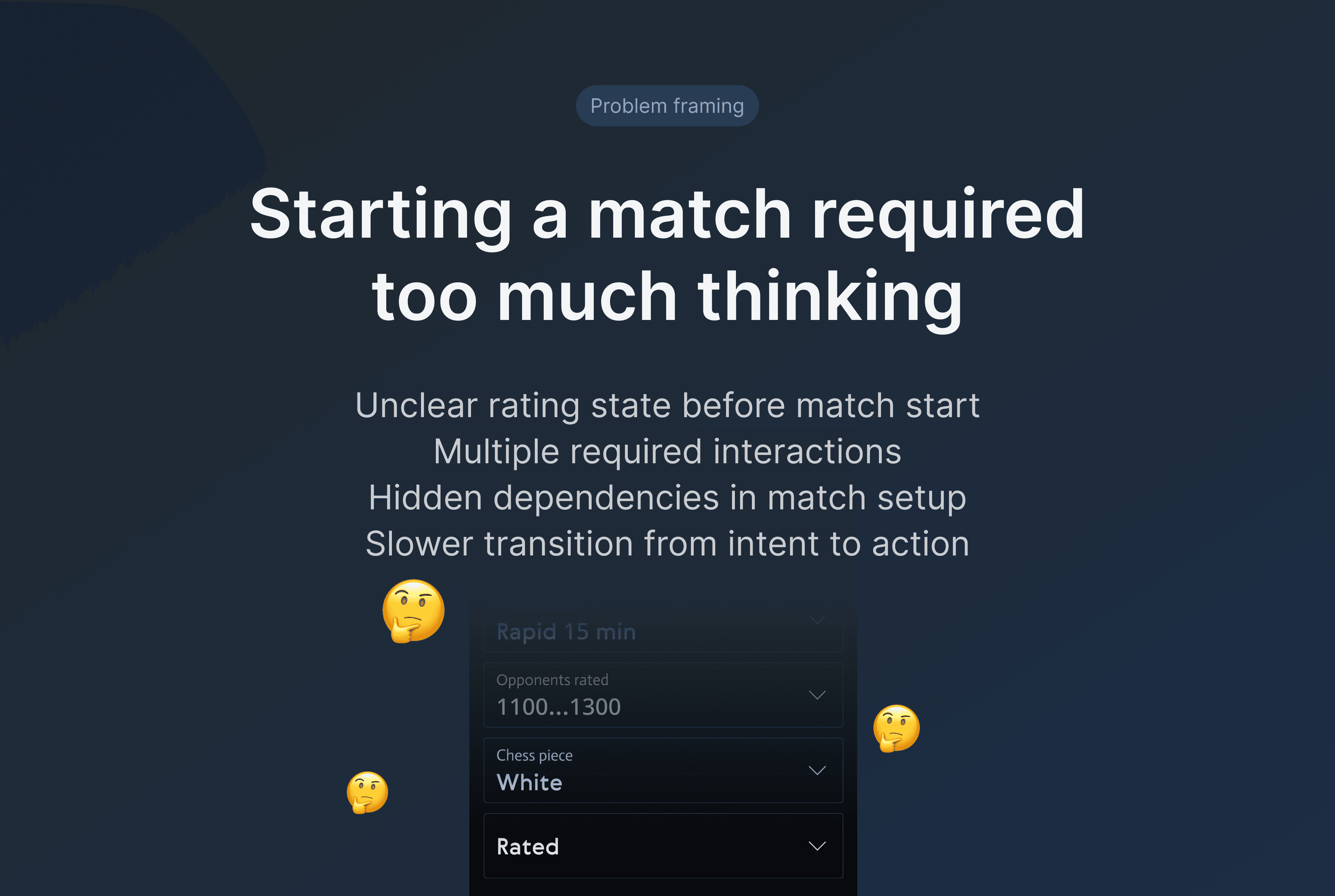
My role was to improve several core product flows to make the experience faster and clearer for competitive players


The match setup flow is a key entry point in the product
Through research and analysis, I identified where the experience broke down and why users struggled to move from intent to action

Solution
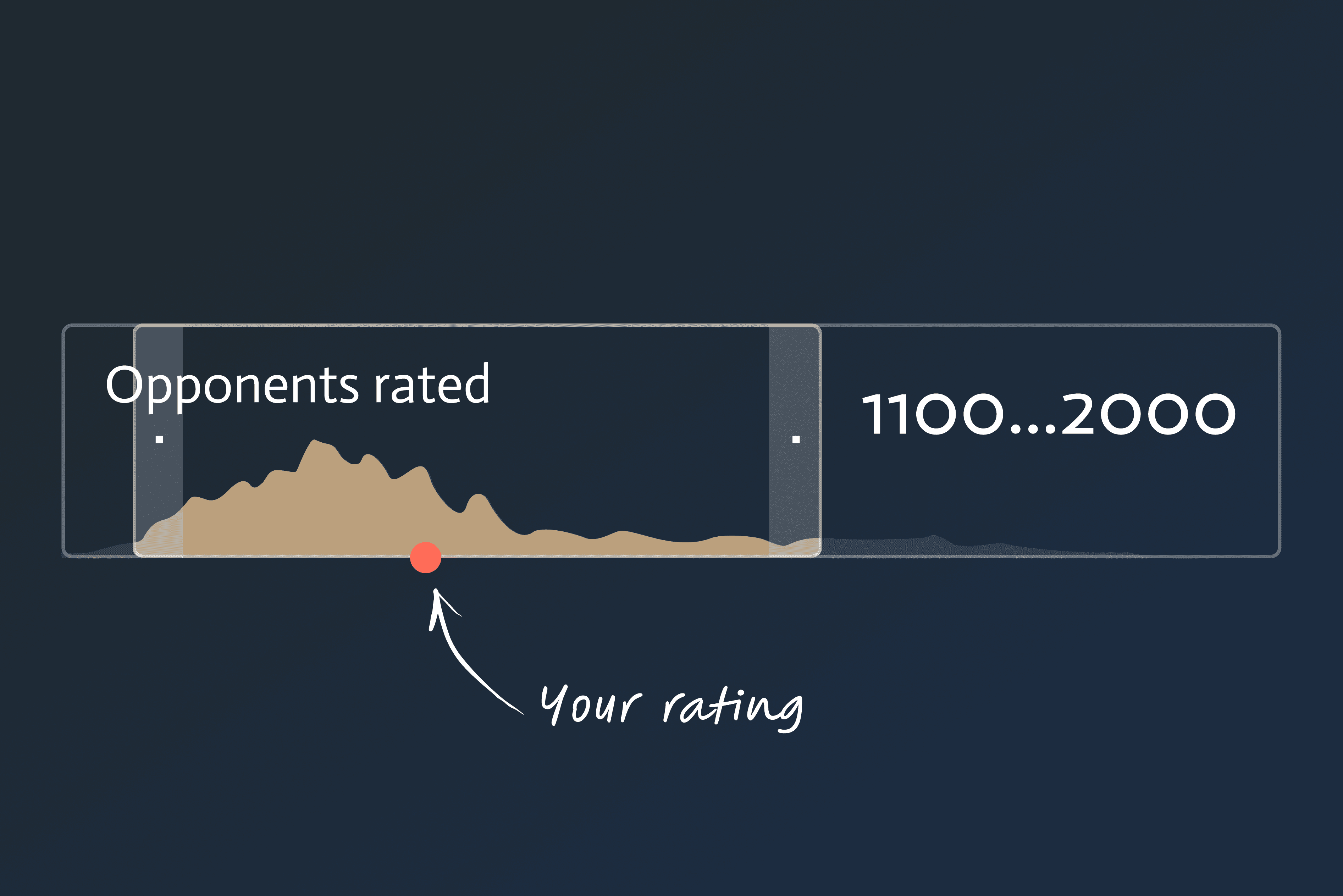
Improved match setup interface with visible rating mode and simplified controls
The same design approach was applied to other parts of the product. Each improvement followed a similar process:
Problem identification ⭢ Research and insight gathering ⭢ Hypothesis formation ⭢ UX redesign ⭢ Prototype testing ⭢ Implementation with the development team
Tournament discovery
Goal: help players quickly discover relevant tournaments. Research included analyzing player behavior and reviewing how competitive platforms present upcoming events
Game Result and rating feedback
Goal: clearly communicate match outcome and rating changes. This feedback reinforces the competitive loop and motivates players to continue playing.

Chat experience
Chat was designed as part of the core product experience rather than a secondary feature. In a competitive environment like FIDE Online Arena, communication happens around games and tournaments. Players interact between rounds, react to results, and engage with other participants. The goal was to support this interaction without distracting users from gameplay.
Managing real-time tournament complexity
Designed to help players quickly understand the current round, follow multiple games, and track their position without losing context in a high-density mobile interface
My take on this
One thing I particularly enjoy in product design is working with structure and systems. On this project, a lot of impact came not from adding new features, but from refining existing ones, simplifying flows, clarifying states, and making the interface more predictable. It’s the kind of work where small decisions compound into a noticeably better experience.